
Among manufacturing companies that went to the National Company Law Tribunal (NCLT), chemicals and metal firms witnessed more resolutions while companies in the labour intensive (employment friendly) leather and textile sectors mostly get liquidated, reports Abhishek Waghmare.

India is expected to harvest 291.95 mt of foodgrain in 2019-20

The size of Delhi's Budget is close to Rs 55,000 crore, or about 6 per cent of its gross state domestic product (GSDP). What set the state apart is that in the last decade, its fiscal deficit hardly crossed 1 per cent of GSDP, while many other states grappled to contain it within 3 per cent. This was largely possible due to the revenue surplus position, reports Abhishek Waghmare.

The impact of economic slump was visible in the Budget's fine print, as this step-by-step explanation show how the Budget math was worked out, reports Abhishek Waghmare.
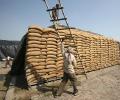
This is the highest in the past five years and almost 24 per cent more than last year.

Finance Minister Nirmala Sitharaman has brought down the budgetary allocation for the fertiliser subsidy for FY21 to Rs 71,309 crore, from the RE of Rs 79,998 crore for FY20, while increasing food subsidy to FCI through "ways and means advance" to Rs 50,000 crore for FY21, from Rs 36,000 crore in RE for FY20, and under the National Food Security Act (NFSA) to Rs 77,982 crore, from Rs 75,000 crore.

In comparison to other asset classes, globally, gold rallied significantly after many years to deliver 18.4 per cent returns in 2019.

While rising food inflation is a matter of grave concern for a significant chunk of the population and for policy makers as well, it marks a turnaround in the fortunes of the farmer, reports Sanjeeb Mukherjee.

A pick-up in farmer income could have a cascading impact on the rural economy, though agriculture is becoming a smaller part of India's overall rural incomes.

Starting today, Modi and top officials in the Prime Minister's Office will be briefed by various central ministries and departments on their plans as well as agenda for the next five years. They will also apprise the PMO of the work they have done so far in realising the agenda of government's second term in office.

In 2009, the UPA government, had announced a slew of measures to boost liquidity in NBFCs. These included a scheme for providing liquidity support to NBFCs having assets size of over Rs 100 crore through a SPV.

If the protected growth in GST revenue is reduced to 10 per cent, the Centre would save more than Rs 25,000 crore in 2020-21 if none of the states show any revenue growth. This would nearly amount to 0.1 per cent of the gross fiscal deficit and help the government in avoiding fiscal slippage to some extent in subsequent years.

In the 2020-21 Budget, the prime minister and the finance minister are keen to stamp their narrative, after various rollbacks following the previous Budget, said top government sources. Besides the scheduled meetings, the sources said, the Prime Minister's Office is expected to hold several meetings with top secretaries and officials on various ongoing schemes, their performance and also how some of them could be tweaked for better results.

Industry players said they were indeed seeing a serious fall in capacity usage, though some sectors were seeming to prevent further fall in the overall capacity utilisation.

India exported $102 million worth of dehydrated onions in 2018-19.

Only one of the three drivers of the economy has performed in the way it should: government spending grew at 15.6 per cent, reports Abhishek Waghmare.

Though the NITI Aayog did not give its estimates for the required GDP growth at constant prices, economists pegged it at 9 per cent, a feat not seen since the GDP series was revised with 2011-12 as the base year.
A look at six indicators shows all of them have collapsed from positive growth in April to contraction in September.

It shows that states would require a compensation to the tune of at least Rs 1.67 trillion in 2024-25, as none of them would be able to achieve a 14 per cent growth every year.

While experts pointed out the impact of corporation tax cuts cannot yet figure in collections as most companies are yet to decide on their choice, government officials said a part reason for slow collection is the tax cut.
 © 2026 Rediff.com - Investor Information - Advertise with us - Disclaimer - Privacy Policy - Sitemap - Feedback - About us - Terms of use - Grievances